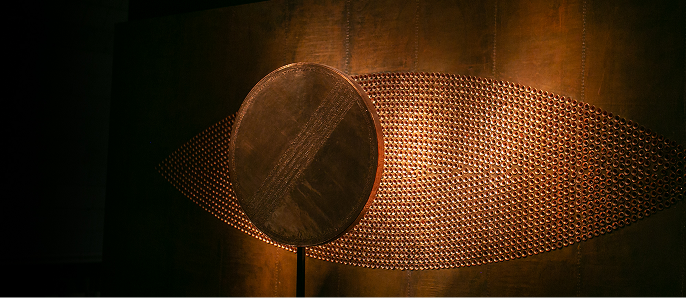

African Art: Gods, Ancestors, Life

When

Till 17 JAN 2027,

Event location

exhibition halls, 4 floor

12+

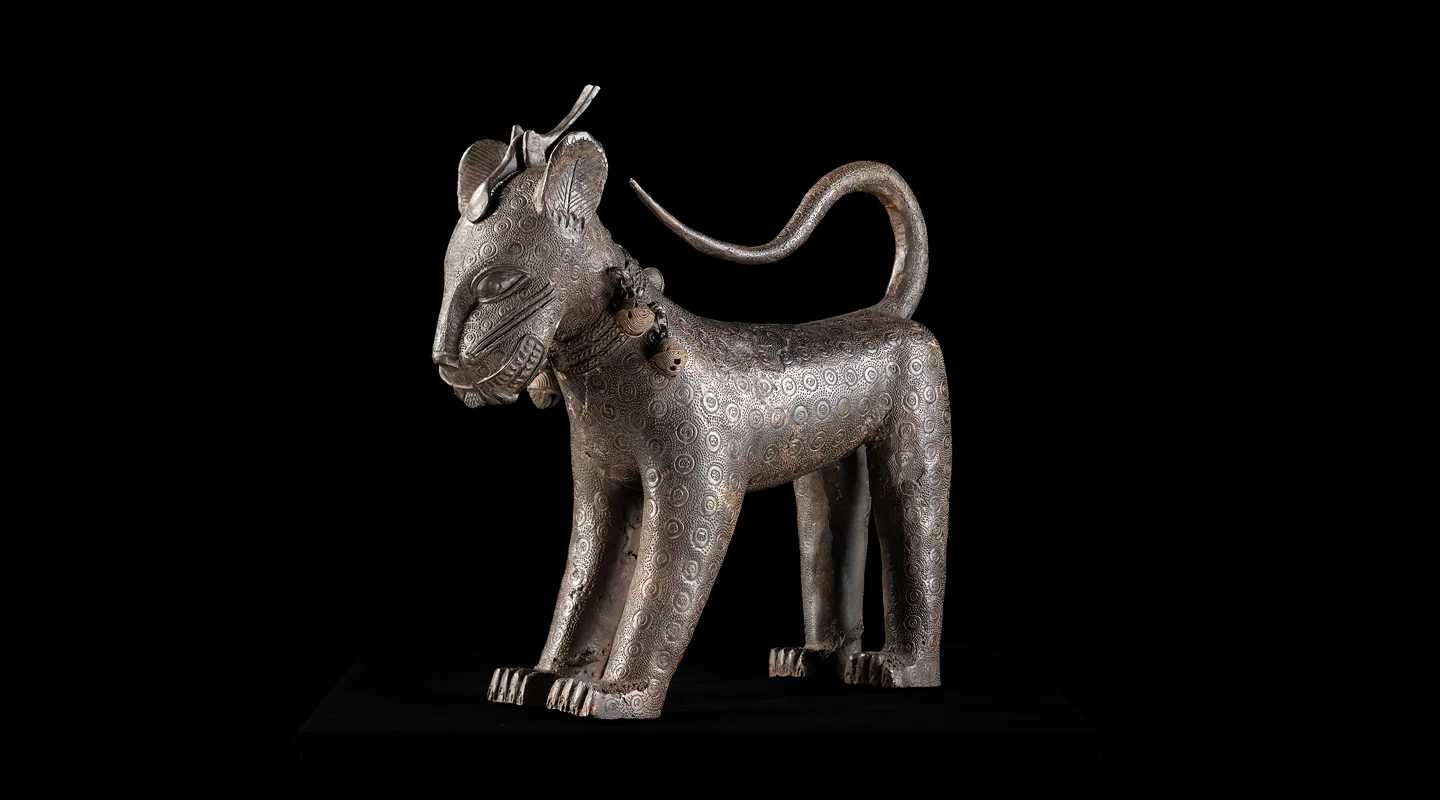
The exhibition presents a collection of more than 800 African art objects assembled over nearly thirty years, beginning in the 1980s, by Leningrad- and New York-based artist and sculptor Mikhail Zvyagin. The collection is now part of the ZILART Museum holdings.

This extensive body of works represents diverse peoples, regions, and civilizations of West and Central Africa. It includes bronze and terracotta sculptures of medieval rulers from Nigeria and the Kingdom of Benin, African Madonnas created by the Bambara people of Mali, cubist and fauvist Kifwebe masks from the Luba and Songye cultures, nail-studded Bakongo power figures, court art from equatorial African kingdoms, and much more.

Экспонат выставки африканского искусства 1 Экспонат выставки африканского искусства 2

The exhibition design author, architect and artist Evgeny Ass, conceived it as a map in which each archetypal theme has its own territory or island. Each island brings together objects of different ethnic origins from several cultural and historical regions of the continent.

There are eleven islands in total, dedicated to ancestors, secret societies, initiation rites, prosperity, magic, animals, fertility, weapons, power, the good life, and remembrance.

Russian art museums have rarely presented African art on this scale. This exhibition is the first project of its kind and is conceived as a long-term presentation.

Stepping Off the Pedestal: Sculpture in Real Space

When

Till 5 JUL 2026,

0+

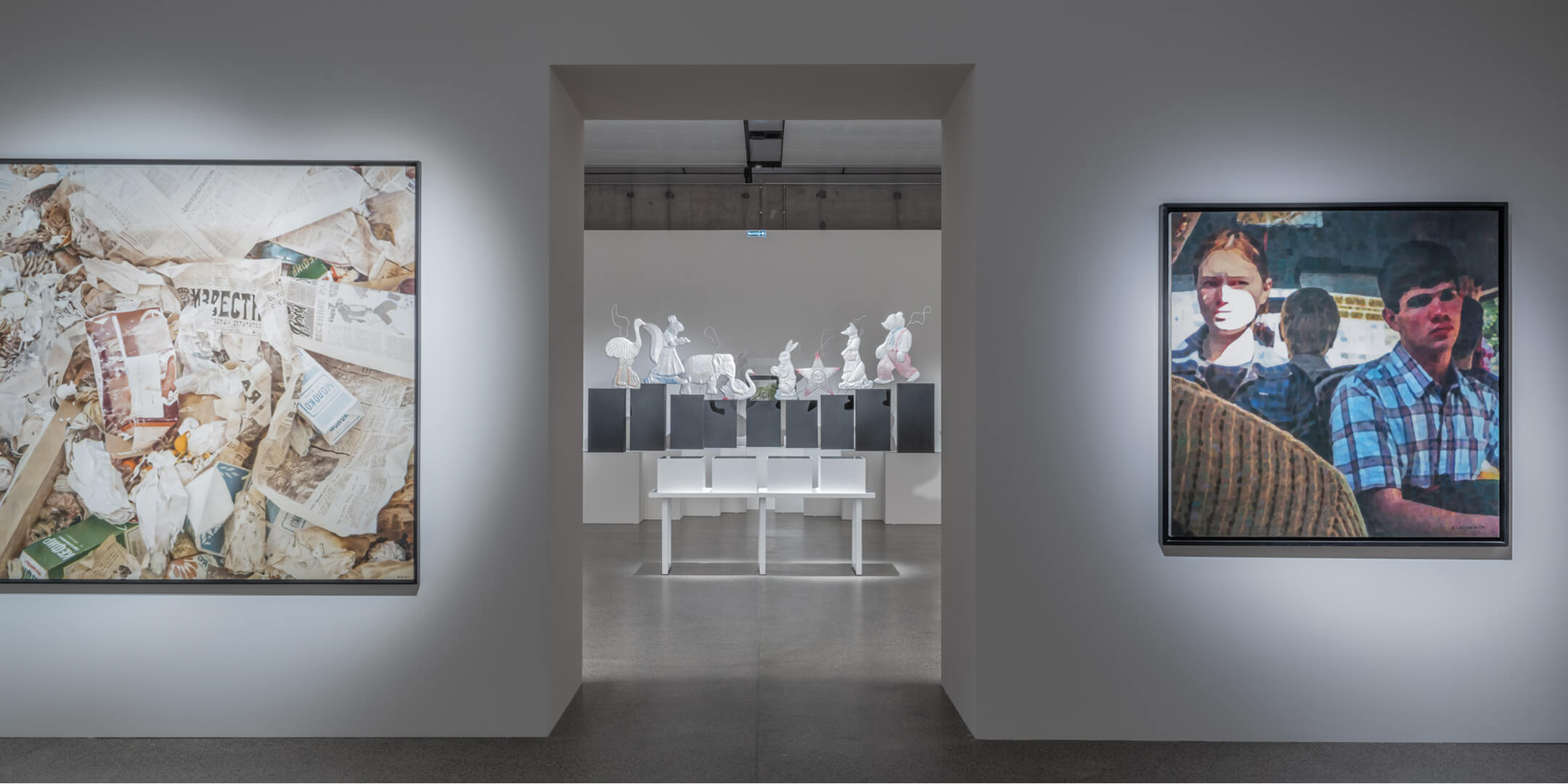
This exhibition occupies two floors of the museum and brings together works by leading sculptors and artists from Saint Petersburg and Moscow of the XX-XXI centuries. It creates a dialogue between works and highlights connections that are not always immediately apparent.

The exhibition introduces visitors to Saint Petersburg monumental and genre sculpture from the second half of the twentieth century, a field that has often been overlooked and that holds an important place in the museum’s collection.

Participating artists include sculptors from several generations such as Mikhail Anikushin, Lyubov Kholina, Alexander Ignatiev, Mikhail Ershov, Evgeny Rotanov, Robert Lotosh, and Dmitry Kaminker.

Sculptures and installations by Alla Urban and Kirill Alexandrov, as well as costume-objects by Sergey Chernov, a longtime collaborator of Sergey Kuryokhin’s ‘Pop Mechanics’ art collective, are shown in dialogue with paintings by artists of the 1960s generation including Erik Bulatov, Oleg Vasiliev, Yuri Zlotnikov, Semyon Faibisovich, and Eliy Belyutin.

The exhibition design is authored by architect and artist Yuri Avvakumov.

Grisha Bruskin DIES ILLA

When

Till 17 JAN 2027,

Event location

exhibition halls, 5 floor

18+

This exhibition has an age restriction of 18+. Discounted tickets for children and entry for children without a ticket are not permitted.

Tickets for this exhibition are sold for specific time slots (a time slot is a 30-minute interval during which you may enter the exhibition). If you arrive earlier than the time slot indicated on your ticket, you will be asked to wait until your session begins. If you are late for your time slot, you will be asked to wait until the exhibition becomes less crowded. Last entry to the exhibition is at 21:30.

Photography and video recording are not permitted in this exhibition.

Grisha Bruskin is an artist who gained international recognition during the period of unofficial Soviet art. In 1988, at the first legendary Sotheby's auction in Moscow, his 'Fundamental Lexicon' painting attracted wide attention both for its record-breaking sale price and for the significance of its artistic statement.

For the Russian Pavilion at the 57th Venice Biennale in 2017, Bruskin created the project 'Scene Change', which fully articulated his distinctive visual language. This language is built around a personal reworking of iconography, including totems, symbols of power and violence, and images of warriors, victims, and mass human migration.

Экспонат выставки Dies Illa

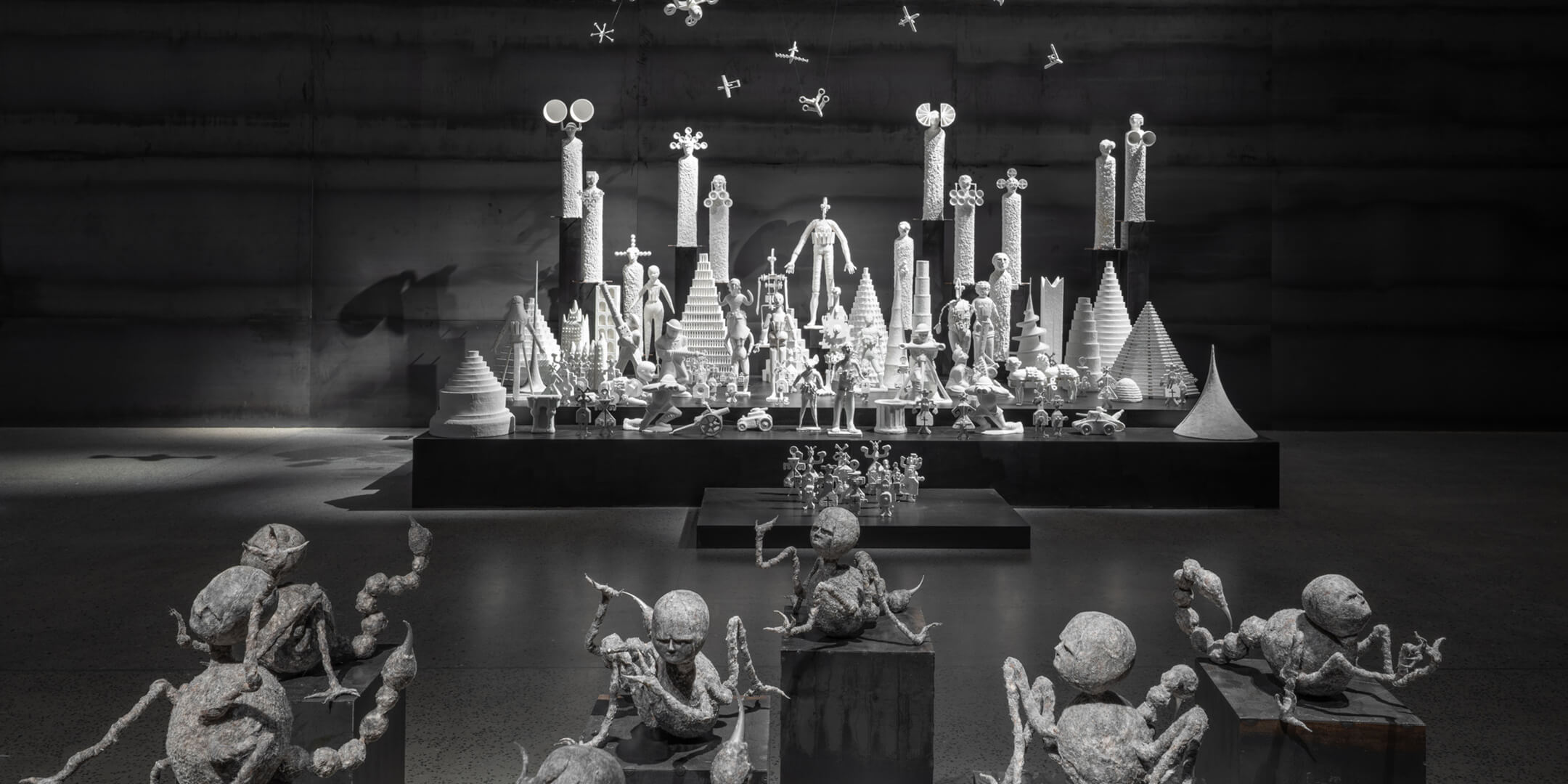
The installation 'Dies Illa' was created by Bruskin specifically for ZILART Museum. It incorporates motifs from 'Scene Change' and from his 2023 project 'The Great Tomorrow', completing a trilogy that has taken shape over time. The title refers to the Latin phrase 'Dies irae, dies illa' meaning 'That day, the day of wrath' which opens the Catholic hymns and many classical requiems.

In this work, Bruskin combines spatial and theatrical dramaturgy. He draws on the expressive tools of shadow theatre, puppet theatre, and video projection. The artist views the installation as a mediating space that brings together objects, assemblage, and the viewers themselves.

The exhibition architecture was designed by Igor Chirkin.

Please note that no more than 30 visitors can be present in the exhibition space at the same time due to the nature of the installation. We appreciate your understanding if waiting is required.


«Shelter of the Innocents»

When

Till 15 JUN 2027, Permanent exhibition

Event location

5th floor terrace

18+

Alexander Brodsky is an internationally recognized artist and architect and one of the founders of "paper architecture". He is a professor at the International Academy of Architecture. His works are held in the collections of MoMA in New York, and Tate Modern in London, the Pushkin State Museum of Fine Arts in Moscow, the Russian Museum in Saint Petersburg etc. In 2006, he represented Russia at the Venice Architecture Biennale.

Brodsky built his first urban residential building in the Zilart district, titled House with Pigeons. Two-meter-tall pigeon sculptures are installed on its roof. The artist considers pigeons an inseparable part of the cityscape, birds that never migrate and always remain at home.

Экспонат 1 Экспонат 2

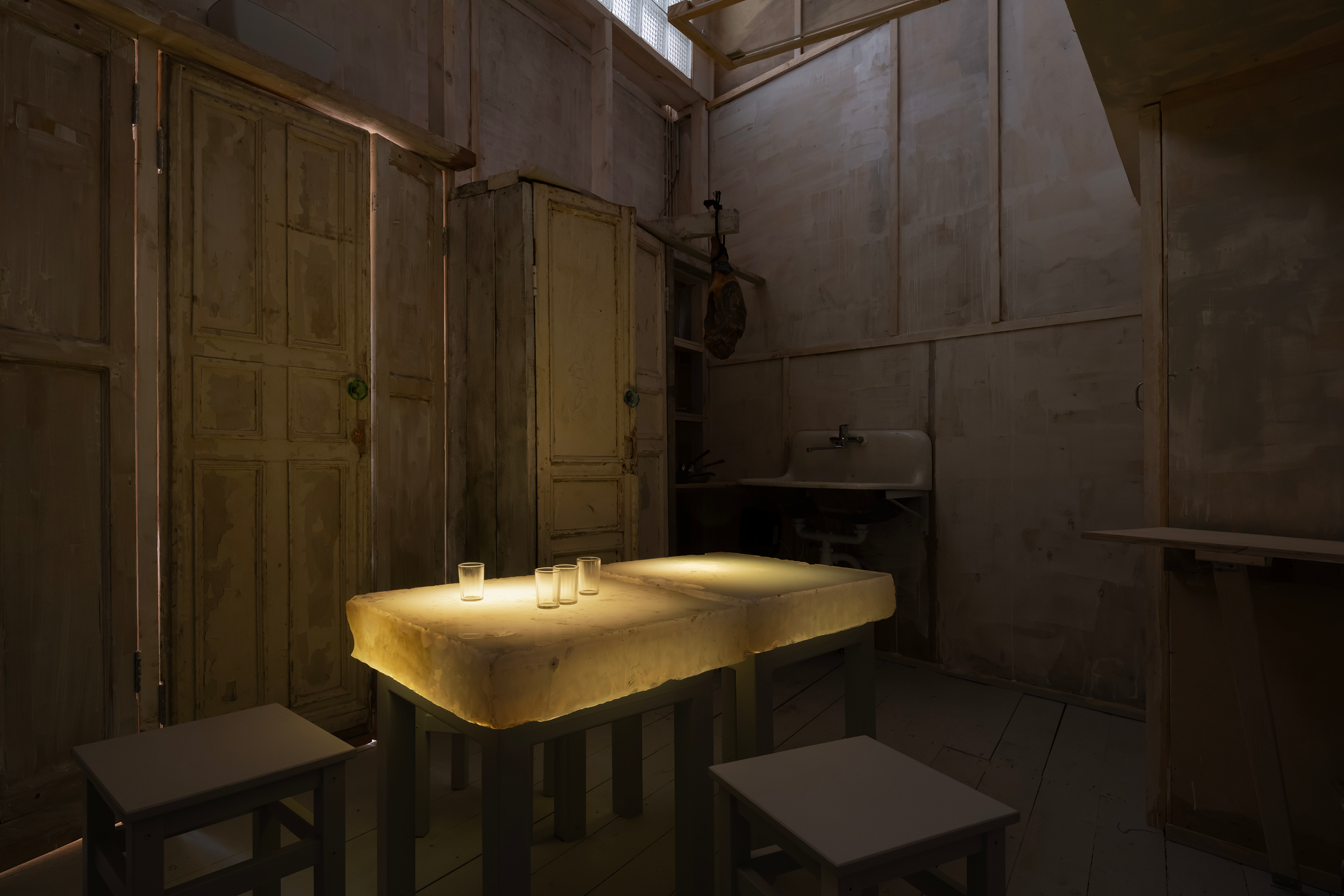
Another Brodsky's building, Shelter of the Innocents, is located on the terrace of the museum's fifth floor. The tilted structure, made of wood and plywood and covered with roofing felt, appears to have grown into the museum building and taken on a life of its own.

Behind its creaking doors and narrow corridors is a small bar where visitors can sit at a table made of "petrified rum" while listening to the constant sound of waves. The installation conveys the atmosphere often found in Brodsky's work, which he describes as a state of cheerful melancholy.

Due to limited capacity, a separate ticket is required to visit the installation. These tickets will soon be available on the museum website.


Wim Delvoye «Dump Truck»

When

Till 17 JAN 2027,

0+

The square in front of the museum features Dump Truck, a life-size sculpture made of corten steel in a Gothic style by Belgian artist Wim Delvoye, one of the most prominent neo-conceptual artists of today.

The sculpture playfully refers both to the construction of the ZILART district and to the industrial past of the ZIL site, where machines and industrial design were always central to the area's identity.

Delvoye is widely known for transforming industrial objects into elaborate Gothic structures, including concrete mixers, bulldozers, dump trucks, and other construction machinery. These works, which merge industrial design with architectural ornament, have become iconic within contemporary art.

Delvoye's works are held in major museum collections worldwide and have been shown at the Venice Biennale and Documenta IX in Kassel. Dump Truck is part of the ZILART Museum collection and marks the starting point of the museum's future public art program.